Anon Pls (Us Not You)
DeuxMoi as the TMZ of the 2020s, except everyone’s a correspondent and no one’s held accountable

If you’ve lived in LA or NYC long enough, you’ll start to notice that DeuxMoi isn’t “dispatches from another world.” The feed is sourced from people standing exactly where you are: the assistants, the junior publicists, the friend-of-a-friend who nannies for someone you’d rubberneck at if they were walking down the street.
I spent some time in Hollywood on the other side of this exchange, protecting the location of a client’s dinner reservation, drafting a statement to get ahead of a sighting, making sure the public only saw what we wanted them to see. So when I watch people type what they overheard into an Instagram DM with the header “anon pls,” the word that comes to mind isn’t gossip. It’s recon.
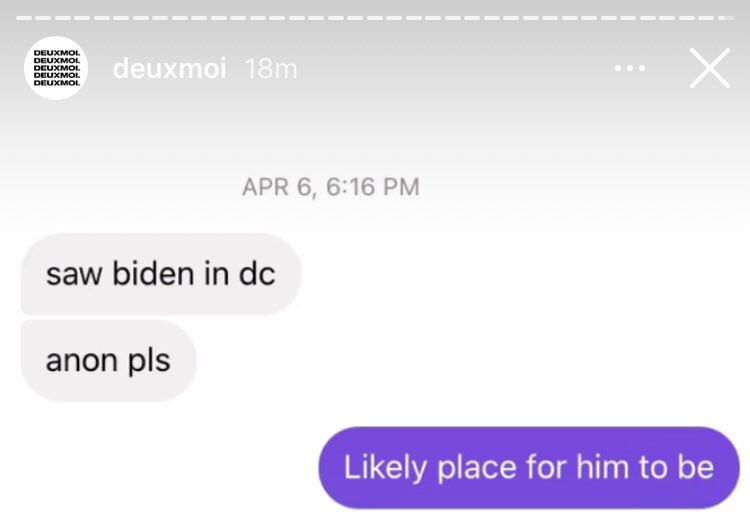
DeuxMoi started in 2013 as a fashion blog, though it didn’t become DeuxMoi as we know it until early 2020, when everyone was home, bored, and starving for something to read that wasn’t the news. It has since amassed over 2.3 million Instagram followers on the strength of one mechanic: anonymous tips submitted by people supposedly “in the know.” Assistants, nannies, flight attendants, drivers, junior publicists, you name it. Cut to today, and the entire below-the-line infrastructure of fame has a platform.
What makes it go down so easily, is that most of what DeuxMoi publishes isn’t scandalous at all. It’s a coffee order, a sandwich preference, that J. Lo allegedly eats one bite of crème brûlée and calls it dessert. The founder has said that the trivia of it all is what brings her the most joy – what shampoo Jennifer Aniston uses, what size jeans someone bought. Nobody reads that fluff as surveillance, but the mundane stuff and the location tip-off arrive through the same pipe, and the account treats them identically.
The comparison everyone reaches for is Gossip Girl, of course, which can be taken as a compliment – the glamour, the omniscience, the thrill of the blast. But Gossip Girl wasn’t the hero of the show. It was the villain.
The characters are surveilled by it, humiliated by it, and occasionally destroyed by it. Throughout the series, an anonymous figure tracks their precise movements, crowdsources sightings from anyone with a phone, and publishes their locations in real time, and the show’s plot largely revolves around the damage that it inflicts.
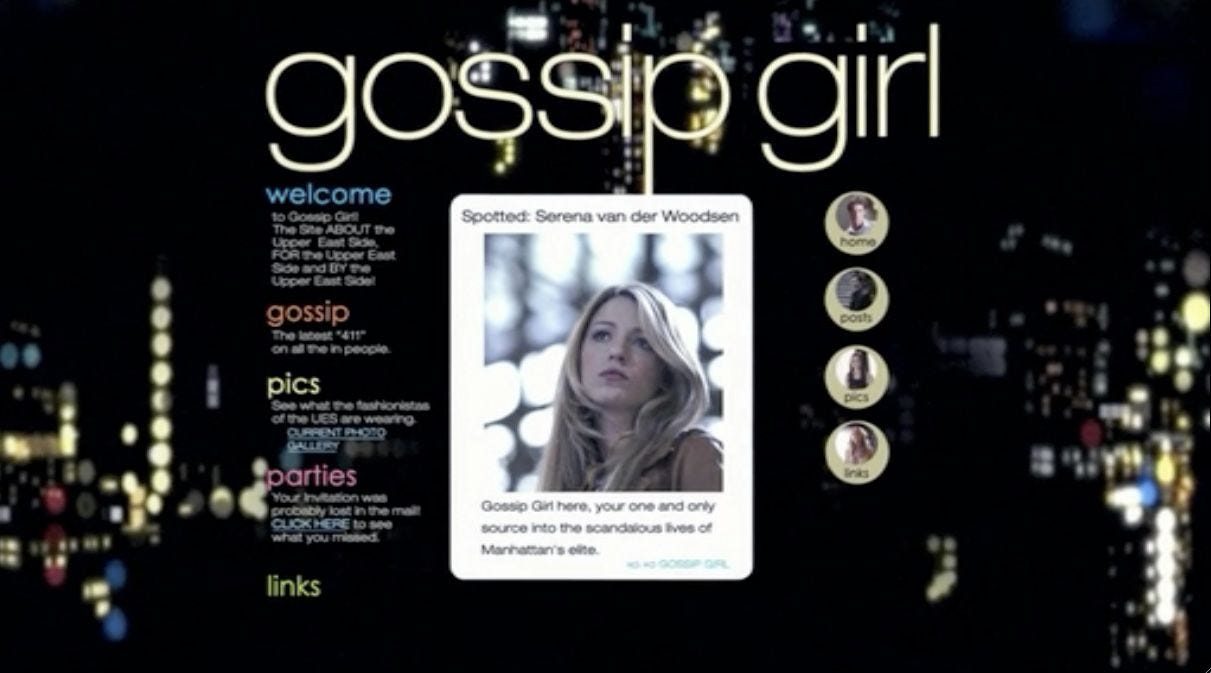
DeuxMoi took that idea, made it real, and made it global.
As with Gossip Girl, DeuxMoi relies on blind item gossip. But what are the tipsters even getting out of it? It isn’t money, and it certainly isn’t fame – anonymity is the entire condition. It’s just a small dopamine hit of having contributed to the feed.
It’s staggering really, how many people are willing to break an NDA for nothing. Not for money, not even for a byline, but for the chance to be the anonymous source of a blind item that millions of people read and never trace back to them. The founder herself seems baffled by it, telling ELLE in 2020, “I am a private account. I’m not verified. So I don’t know why people trust what I’m saying… Like these people don’t even know who the fuck I am and they’re like sending me in their secrets and breaking their NDAs.”
She’s also said that, “Not in the least bit, for one split second, do I feel one iota of responsibility to be accurate,” legally covering herself with the disclaimer “some statements made on this account have not been independently confirmed” in the account’s Instagram bio. Both of those things – that people break their NDAs to be anonymous sources, and that what they send might not even be real – can be true at once, and the account works precisely because they are.
An NDA loses its teeth once the person bound by it believes they’ll never be identified as the leak. The agreement assumes a trail, but anonymity erases the trail, and with it, the only thing that was enforcing it in the first place: the fear of getting caught.
The genius and the rot of DeuxMoi are the same: it severs the tip from the tipster. The assistant who would never sell a story to a tabloid because the tabloid needs a verified source, will gladly hand the same information to an Instagram account for free, because they get both the dopamine hit and a guarantee they were never there.
Celebrities are not innocent bystanders to their own exposure, but they’re still human beings and deserve a modicum of privacy. And there’s something perverse in the timing: they spent the post-tabloid era reclaiming their personhood, yet DeuxMoi is quietly walking that back.
Over the last decade or so, celebrities have rebuilt their images around relatability, from home tours and morning routines to “day in the life” content, largely because parasocial intimacy has become the product in today’s attention economy. Feeling like you know a celebrity is what sells the album, the tour, the movie, the brand.
But this was a strategy of control, not surrender. A caveat of sharing more was to share it on their own terms: to pick the angle, set the timing, and decide which version of their life the public got to see. What they did not give up was their location, their real schedule, and other specifics that turn a public figure into a findable human being. Those, they kept.
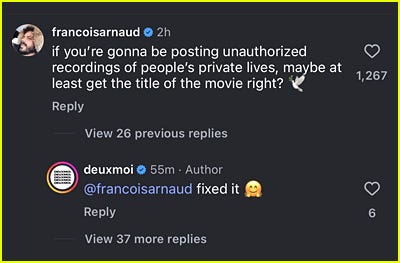
DeuxMoi eliminates those protections. When a star posts a story from a restaurant, they’ve curated the moment, usually posting it hours after the fact. When a stranger at the next table reports which restaurant, when, and who they’re with, the star is left exposed. One is image management, the other is intel.
And we already know what people can do with intel.
We don’t have to imagine the harm – it has a history.
Between 2008 and 2009, the Bling Ring stole roughly $3 million in cash, clothing, jewelry, and designer goods from the homes of Paris Hilton, Lindsay Lohan, Orlando Bloom, Rachel Bilson and others, and they did so by reading the press. They used entertainment news and celebrity sites to learn who was out of town, cross-referenced with Google to find the addresses, and walked into celebrities’ homes while the owners were away at events the media had announced. A second crew did the same thing in 2018, hitting Rihanna and others by checking tour and travel schedules to know when houses would be empty.
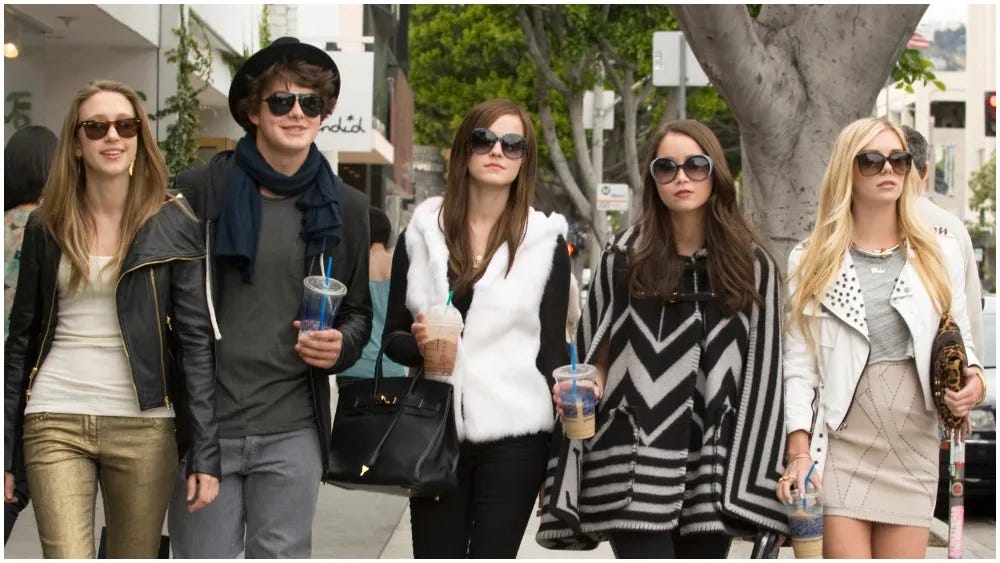
In the 2008 version of events, sites like TMZ and Perez Hilton were online and active, but the effect was smaller because the surveillance hadn’t yet been crowdsourced. The reporting came from a relatively contained set of paid sources, the consequences were novel enough that celebrities were still learning them in real time, and access hadn’t yet been democratized to the point where anyone could become a correspondent.
DeuxMoi closes that gap. Unlike TMZ, it’s not a few contracted paparazzi and a handful of bloggers. It’s everyone, everywhere, with a psychological incentive to be the first to report where someone is right now, sourced from the people physically closest to the target.
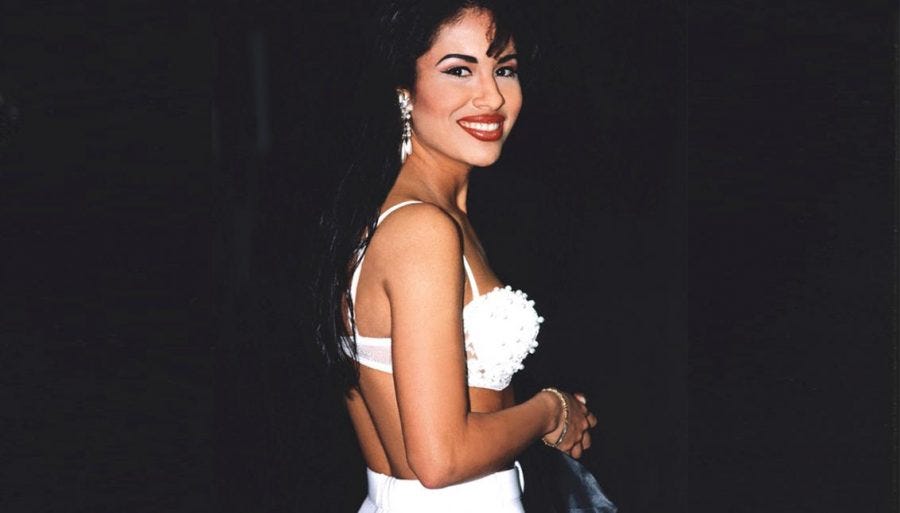
And sadly, the worst-case scenario isn’t theft – the list of celebrities killed by people who called themselves fans isn’t short. John Lennon was shot outside his own apartment by a man who’d gotten his autograph hours earlier. Christina Grimmie was murdered at a meet-and-greet. Selena Quintanilla was killed by the president of her own fan club.
The sequence that turns obsession into contact is: where is this person, when, and how do I get near them. DeuxMoi is positioned to answer all three. That doesn’t make it a neutral gossip account – it makes it a distributed intelligence network branded like a group chat.
And that branding is doing enormous work.
It’s considered embarrassing to read TMZ. People do it, but they do it the way you eat gas-station food – with full awareness that it’s garbage.
DeuxMoi is the opposite. The bold aesthetic, the in-jokes, the merch, “anon pls” as a catchphrase you can buy on a tote bag – it reframed engaging with gossip as something knowing and fun and even chic. TMZ is a creepy guy with a camera staking out an airport; DeuxMoi is your older sister’s cool friend who always knows what’s “in.”
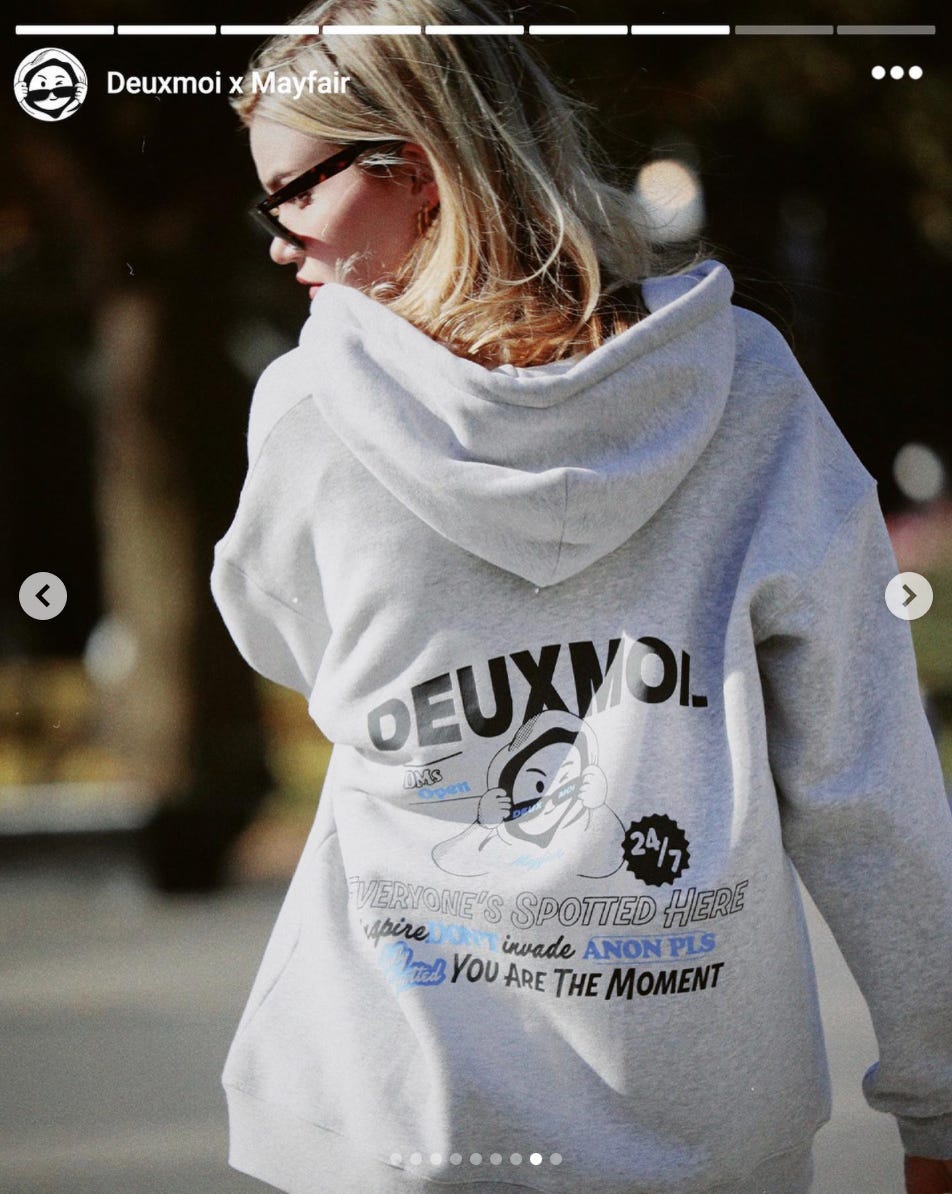
The founder has been rewarded for the distinction, and handsomely: offshoots include a novel, a podcast, and an upcoming HBO series from Greg Berlanti, all built on an account that publishes other people’s locations and doesn’t take responsibility for it. The anonymity that protects her tipsters protects her too – you cannot hold accountable what you cannot name.
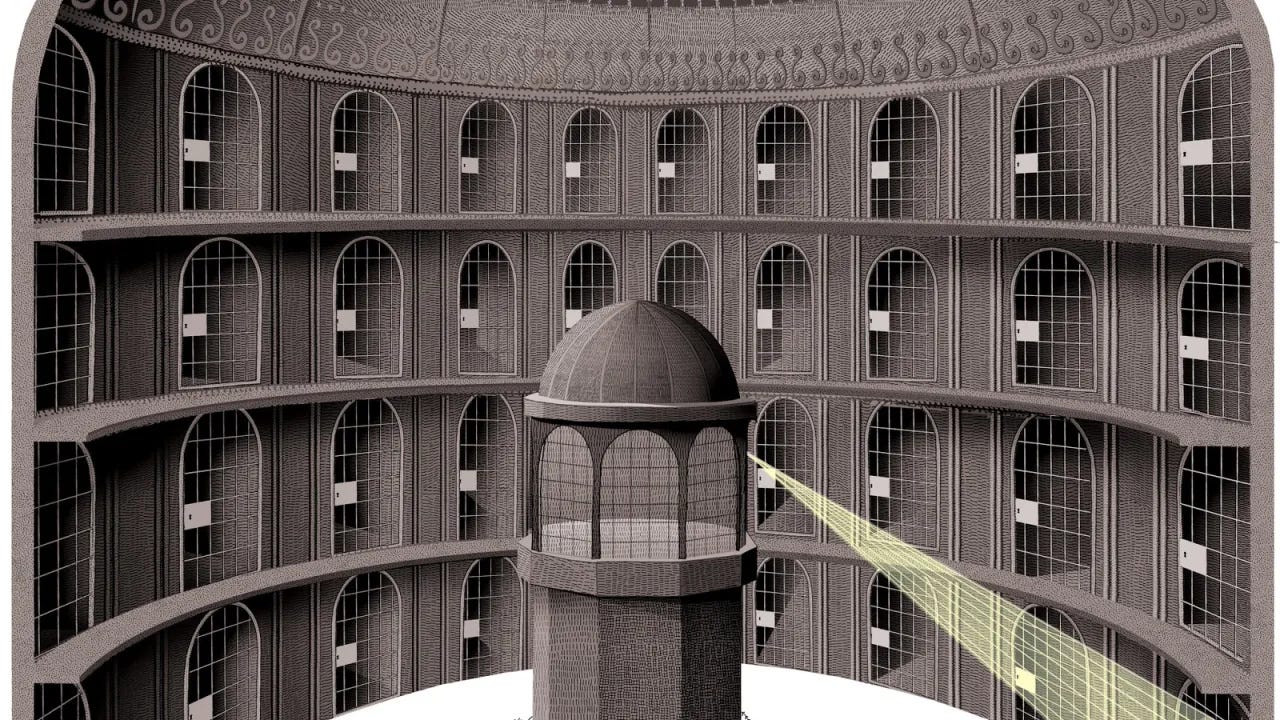
What we’ve built isn’t just a gossip account – it’s a panopticon. The famous are visible from every angle, never sure who is recording; the watchers sit in the tower, anonymous by design; and the account itself is private, which means even the warden can’t be named. Everyone is protected except the people on display. We told ourselves we wanted to know them, when really, we wanted to watch them – and now we have the means to do it constantly.
It feels harmless, because so far, it mostly has been. But an account that reliably answers the question “where is this person, and when” does not linger on dinner reservations forever. The Bling Ring needed a magazine and a few weeks lead time to plan a break-in; the next bad actor just needs to refresh their feed.
Latest:

Related:


Hey! If you’re new here — I’m a former Hollywood publicist turned entrepreneur, writer, and digital nomad. I also do PR for indie filmmakers and creatives. More at www.averydella.com.